Most businesses think they’re doing automating lead follow-up right.
In reality, instant replies do not automatically convert leads.
In practice, instant replies quietly kill conversions.
This guide breaks down what actually works, why most setups fail, and how to build a lead follow-up automation system that increases response rates instead of annoying prospects.
This article is part of our Lead Automation guides focused on building systems that actually convert.
Why Most Automating Lead Follow-Up Systems Fail
Here’s the uncomfortable truth:
Automation isn’t the problem.
Bad automation is.
Most instant replies fail for three reasons:
1. They Trigger Too Early
Sending a long sales message the second someone submits a form feels intrusive. The lead hasn’t mentally “arrived” yet.
2. They Say Nothing Useful
Messages like:
“Thanks for your interest. Our team will contact you soon.”
This does nothing. No clarity. No direction. No trust.
3. They Have No Next Step
If the lead doesn’t know what happens next, they disengage.
Automation without intent is just noise.
The 5-Minute Conversion Window (This Is Where Money Is Won)
Multiple sales studies show the same pattern:
Leads contacted within 5 minutes are dramatically more likely to respond than those contacted later.
Why?
Because:
- The problem is still fresh
- They’re still in “decision mode”
- You’re competing with 3–4 other businesses at the same time
Automation exists for speed, not laziness.
But speed alone isn’t enough.
The Only Automating Lead Follow-Up System That Converts
A high-converting follow-up system has three stages, not one.
Stage 1: Instant Acknowledgment (0–1 minute)
Goal: Confirm the lead made the right move.
What this message should do:
- Acknowledge the request
- Set expectations
- Feel human
Example (not generic):
“Hey, thanks for reaching out — I’ve got your details. We usually respond within a few minutes. Quick question while I check this: what made you look for this today?”
Short. Personal. Open-ended.
Stage 2: Relevant Follow-Up (3–10 minutes)
This is where most systems fail.
Instead of pitching, you qualify.
Good automation reacts to the lead source.
- Facebook Lead → Facebook-specific reply
- Website form → Website-specific reply
You’re not selling yet.
You’re continuing the conversation they started.
Stage 3: Human Handoff (Mandatory)
This is critical:
Automation should never close the deal alone.
Your system must:
- Notify a human
- Assign the lead
- Create urgency internally
If no one follows up manually, automation becomes abandonment at scale.
A Simple, Tool-Agnostic Automation Workflow
You don’t need complex tech. You need clean logic.
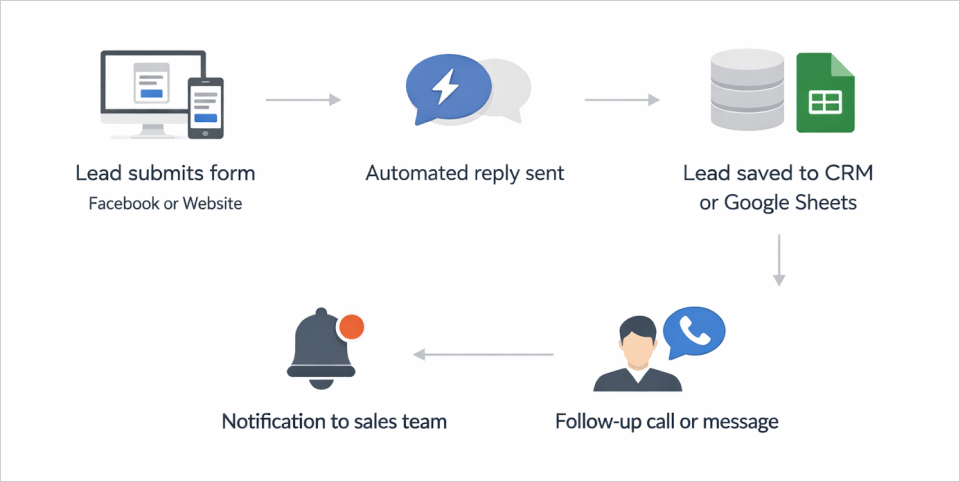
Basic Flow:
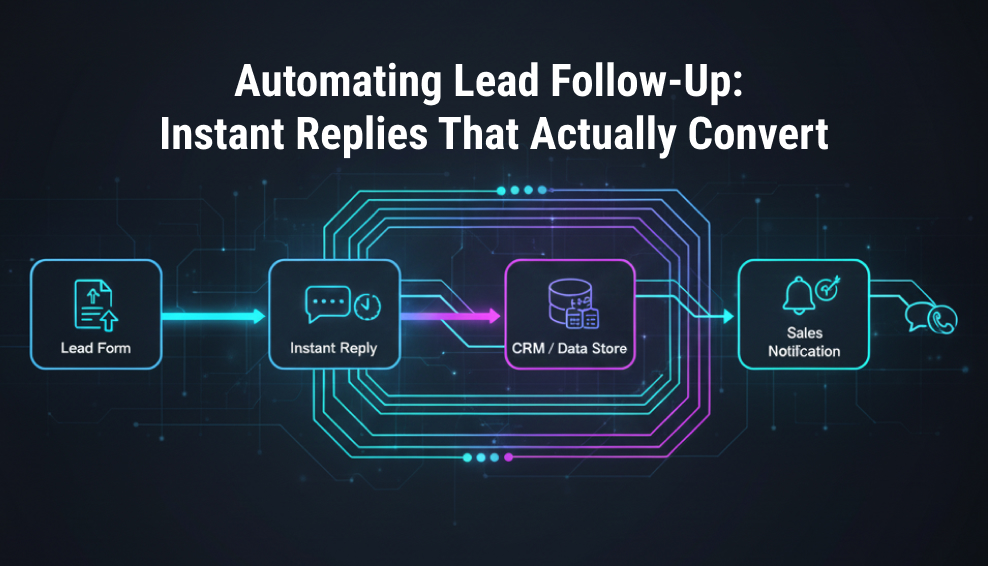
- Lead submits form (Facebook / Website)
- Instant acknowledgment sent
- Lead added to Google Sheets or CRM
- Notification sent to sales/admin
- Human follows up personally
This setup works whether you use Zapier, Make, or Pabbly. We’ve broken down where these tools fail at scale in our Zapier vs Make vs Pabbly comparison.
If you’re comparing platforms, see our breakdown of automation tools and where they fail under real-world load.
Where Automation Should STOP (Most Blogs Won’t Say This)
Here’s where people get greedy — and lose trust.
Do NOT automate:
- Emotional objections
- Price negotiations
- Complex questions
- Urgent complaints
The moment a lead replies with detail, automation steps aside.
Automation supports humans, but it doesn’t replace judgment.
Common Mistakes That Kill Lead Conversion
If your system has any of these, fix them immediately:
- Sending the same reply to every lead
- Delaying human follow-up because “automation is running”
- Over-educating before conversation
- Using buzzwords instead of clarity
Automation should reduce friction, not create distance.
Final Reality Check
Automation doesn’t make businesses grow.
Correct automation does.
Instant replies are powerful only when:
- They feel intentional
- They respect timing
- They guide the next action
If your current setup feels “set and forget,” it’s probably leaking revenue.
What to Read Next
Explore more systems inside our Lead Automation guides or compare platforms inside our Automation Tools breakdowns to avoid scaling mistakes.
TL;DR (For Skimmers)
- Speed matters, but context matters more
- One instant reply is not a system
- Automation should assist, not replace, humans
- If leads aren’t responding, your message — not the tool — is broken